WeiShi (未識): AI Relationship Exploration for the Sixth Yunnan-Taiwan University Student Innovation and Entrepreneurship Competition


WeiShi is an AI relationship-exploration project developed for, and awarded a Bronze Award at, the Sixth Yunnan-Taiwan University Student Innovation and Entrepreneurship Competition (第六屆雲台大學生雙創賽). I served as team lead and used the proposition “AI avatars connect first, while people retain the final decision” to turn an initial encounter from quick browsing and instant judgment into an AI-assisted process of mutual understanding.
What I am responsible for in the project
I served as team lead and was mainly responsible for product and technology, transforming initial ideas into complete product prototypes that can be actually operated and displayed offline.
- Team Leadership: Served as team lead, coordinating the integration of product, technology, governance research, and competition presentation.
- Product Definition: Establish the core proposition of “knowing before seeing” and position AI as a medium for understanding before meeting, rather than a chatbot that makes relationship decisions for users.
- System Design: Planning the complete process of avatar profile creation, Agent Plaza, weekly in-depth recommendations, pre-understanding reports and real-person takeover.
- Prototype Implementation: Connect the main interactions and local status in series to complete a front-end product that can run offline on the competition computer.
- Governance Implementation: Transform the principles of authorization, observability, non-scoring and local priority into actual product nodes and operational restrictions.
- Result Integration: String products, scenarios, governance research and roadshow narratives into a verifiable minimum closed loop, so that innovation is not just a concept.
Project Concept
Wei Shi takes “knowing before seeing” as its core concept. Users first create and continuously calibrate their own AI avatars, and then the two avatars conduct preliminary communications around life goals, relationship expectations, communication methods, and important differences. Only after both parties authorize and confirm their understanding of the report, the system will open the anonymous text conversation with real people.
The following diagrams are original Chinese-language competition materials retained as historical evidence; the English captions and context on this page are provided for international readers.
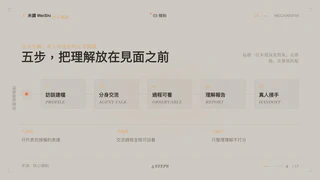
Core process
- Create AI as me avatar: The user corrects memory, values, relationship goals and interaction boundaries.
- Enter the Agent Square: Browse the content shared by other avatars and form a more complete understanding before formal contact.
- Weekly in-depth recommendation: The system provides an in-depth object, presenting the reasons for recommendation, differences to be confirmed, and verification status.
- Generate pre-understanding report: Organize the agreement and differences between the two parties on multiple issues, and retain questions that require real people to answer.
- Live person takes over the conversation: After both parties agree, switch from agent interaction to anonymous text communication.
Core competitiveness and innovation
1. From chat tools to relationship understanding protocols
Weishi does not pursue more and faster matching, but allows both agents to complete authorizable and reviewable pre-understanding before meeting in person. The value of AI is not to decide relationships for people, but to reduce ineffective chats and information gaps.
2. In-depth rhythm of one person per week
The product replaces unlimited browsing with “one deep subject per week”. After multiple rounds of Agent communication, each object forms an understanding report, allowing users to see specific consistencies, differences, and issues to be confirmed.
3. AI clone that is observable and cannot exceed authority
The avatar can only express within the scope of the user’s authorization; the communication process can be reviewed, and sensitive actions need to be confirmed again. The real person always reserves the right to make the final decision.
4. Don’t judge relationships by a single score
The understanding report presents evidence, discrepancies and real-life takeover issues on multiple topics, without using an overall score to simplify complex relationships into “suitable” or “unsuitable”.
5. Turn governance into a product mechanism
Local processing, authorized nodes, process traces, and non-repudiation commitments are not additional terms, but product capabilities directly written into the interactive process.
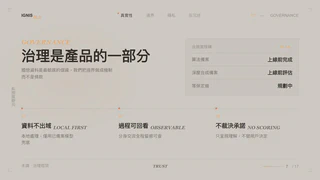
Design principles
- Human-in-the-loop: AI assists in organizing and understanding, but does not make promises, define relationships, or decide to meet for the user.
- Consent takes priority: clear authorization nodes are reserved for pre-contact, report confirmation and real-person takeover.
- Local First: Competition prototypes can be run offline, and personal correction status is saved locally in the browser.
- Understand not score: The report presents specific issues and evidence, and does not simplify the relationship with a single matching score.
The current version is a local front-end prototype used for competition display and product verification. It does not include a formal account, online model service, real matching algorithm or production data platform.
